A complete guide to Saudi spices, from Kabsa spice mix ingredients to everyday seasonings, discover the essential Saudi...

If you have ever scrolled through a hundred abaya listings online and closed the tab without buying anything, you are not alone. Between fabric names you have never heard of, cuts that all start to look the same after a while, and sizing that varies wildly from one seller to the next, buying an abaya online can feel far more complicated than it should.
This guide exists to fix that. Knowing how to choose the right abaya comes down to a handful of things that actually matter: the cut, the fabric, the fit for your body and your climate, and a bit of honesty about what you will actually wear versus what looks nice in a photo. Once you understand those basics, shopping becomes a lot faster and a lot less stressful, whether you are ordering your first abaya or your fiftieth.
Before fabric or fit, start with cut. The types of abayas available today go well beyond the plain black robe most people picture, and knowing the difference makes everything else in this guide easier to apply.
Style | Best For | Coverage Level |
Closed | Daily wear, simplicity | Full |
Open front | Layering, versatility | Adjustable |
Kimono | Warm climates, relaxed fit | Full, looser |
Butterfly | Occasions, photos | Full, dramatic |
Embroidered | Weddings, Eid, formal events | Full, decorative |
The traditional style, worn over the head or slipped on like a dress, with no front opening. It offers the most coverage and tends to sit closest to how the abaya has been worn for generations. A good option if you want something simple that does not require thinking about layering underneath.
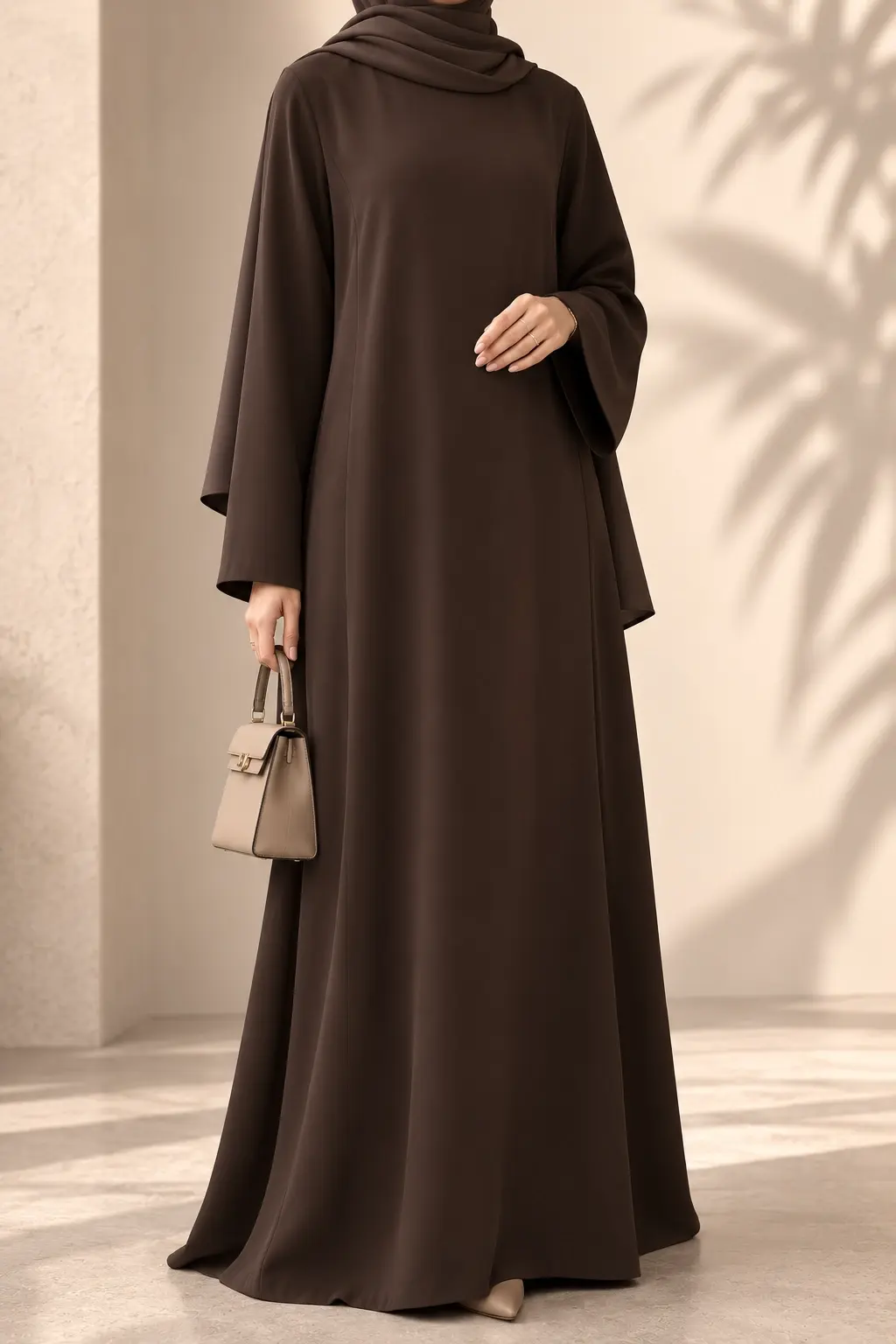
One of the most searched styles right now, and for good reason. It opens down the front like a coat, usually secured with snap buttons, ties, or nothing at all if worn open over an outfit. It is more versatile day to day since it can be styled closed for full coverage or worn open over trousers and a top for a more contemporary look.
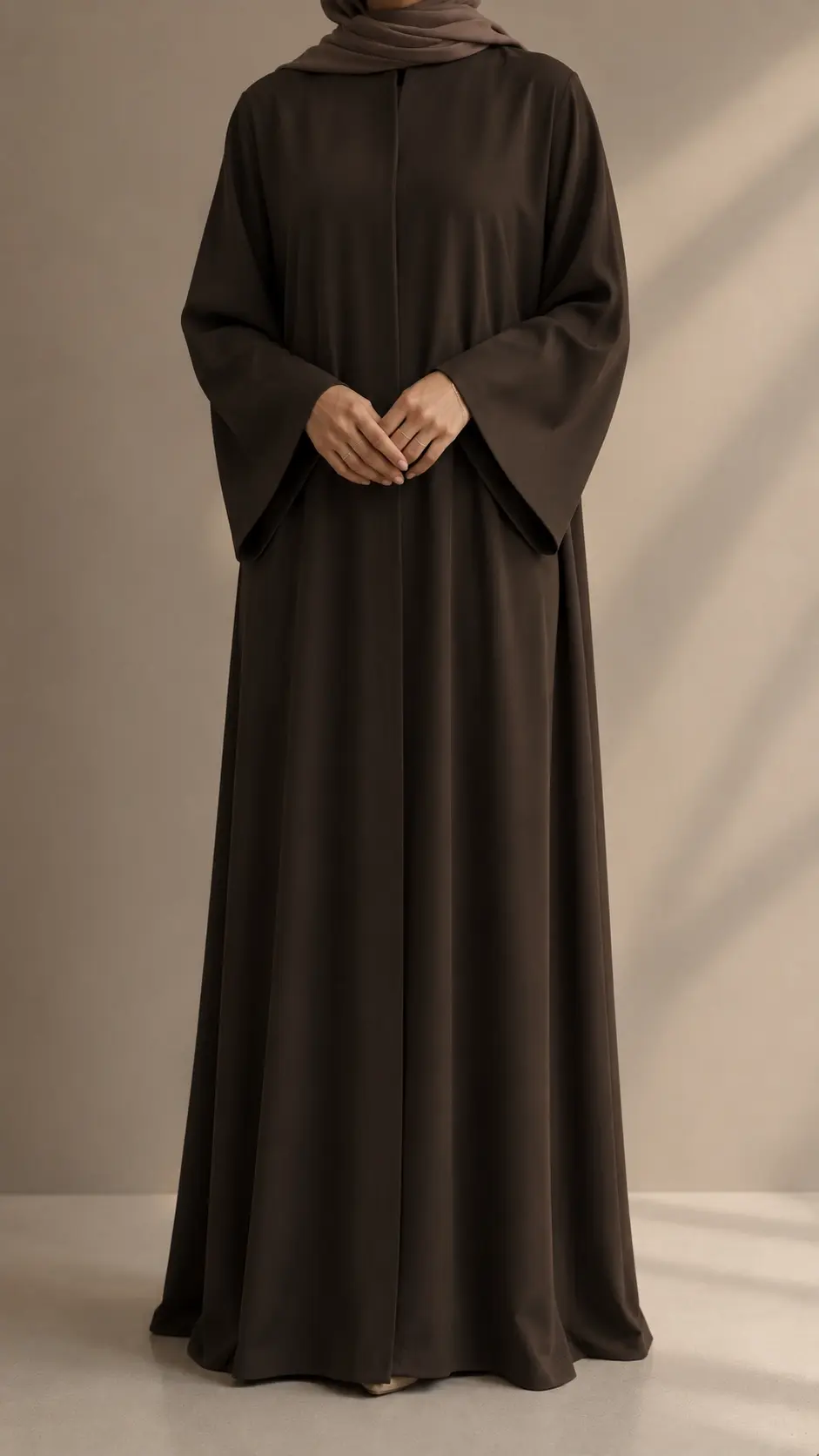
A looser, wrap-style cut inspired by kimono silhouettes, typically without a fitted waist and often tied with a sash or belt. It has become one of the most consistently searched abaya styles globally over the past year, popular for its relaxed, effortless shape that works well in warmer weather.
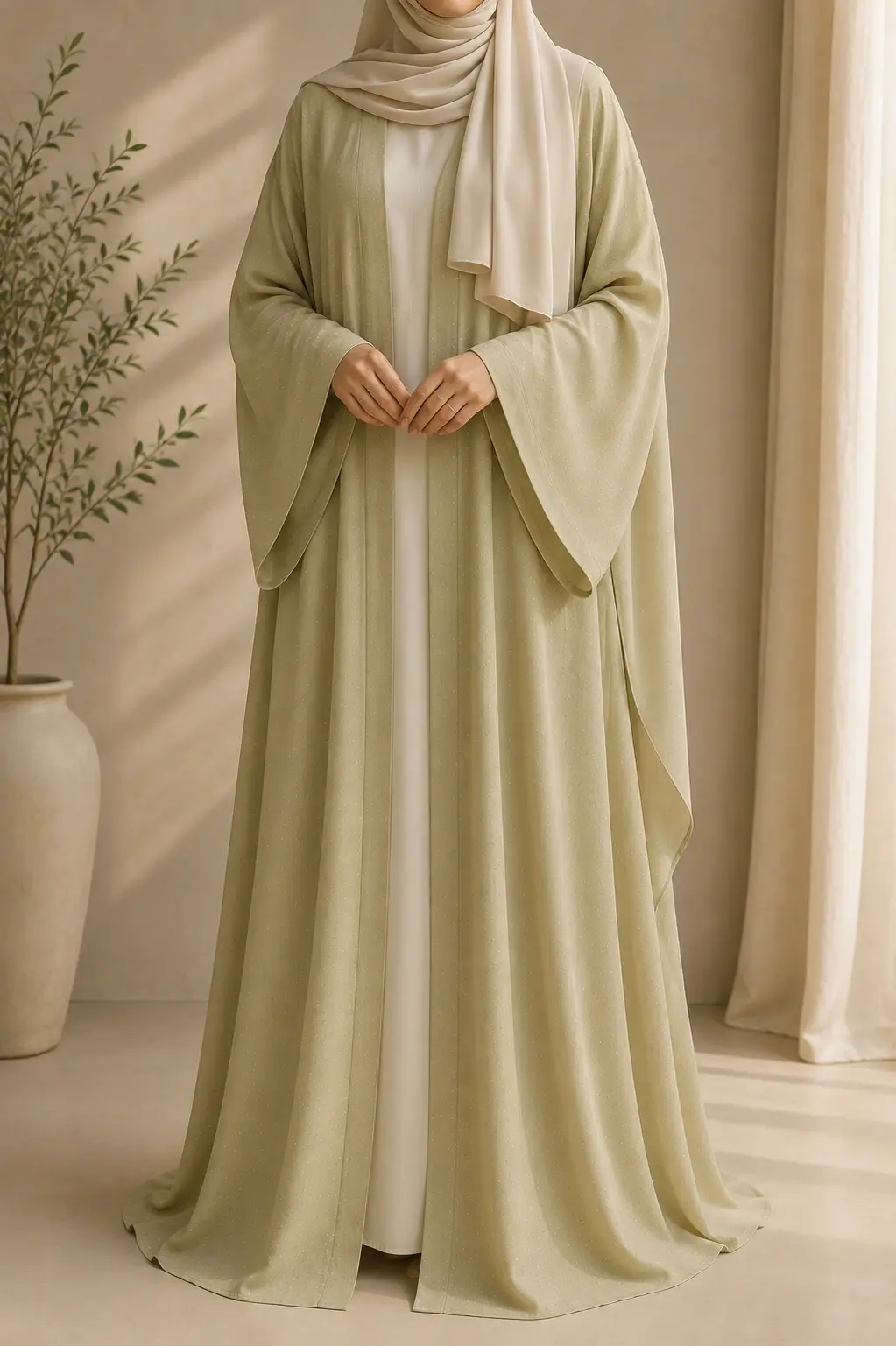
Wide, flowing sleeves that spread out like wings when the arms are extended, giving the garment real movement and drama. This style photographs beautifully and works well for occasions, though the wide sleeves mean it is worth checking sleeve length carefully before ordering.
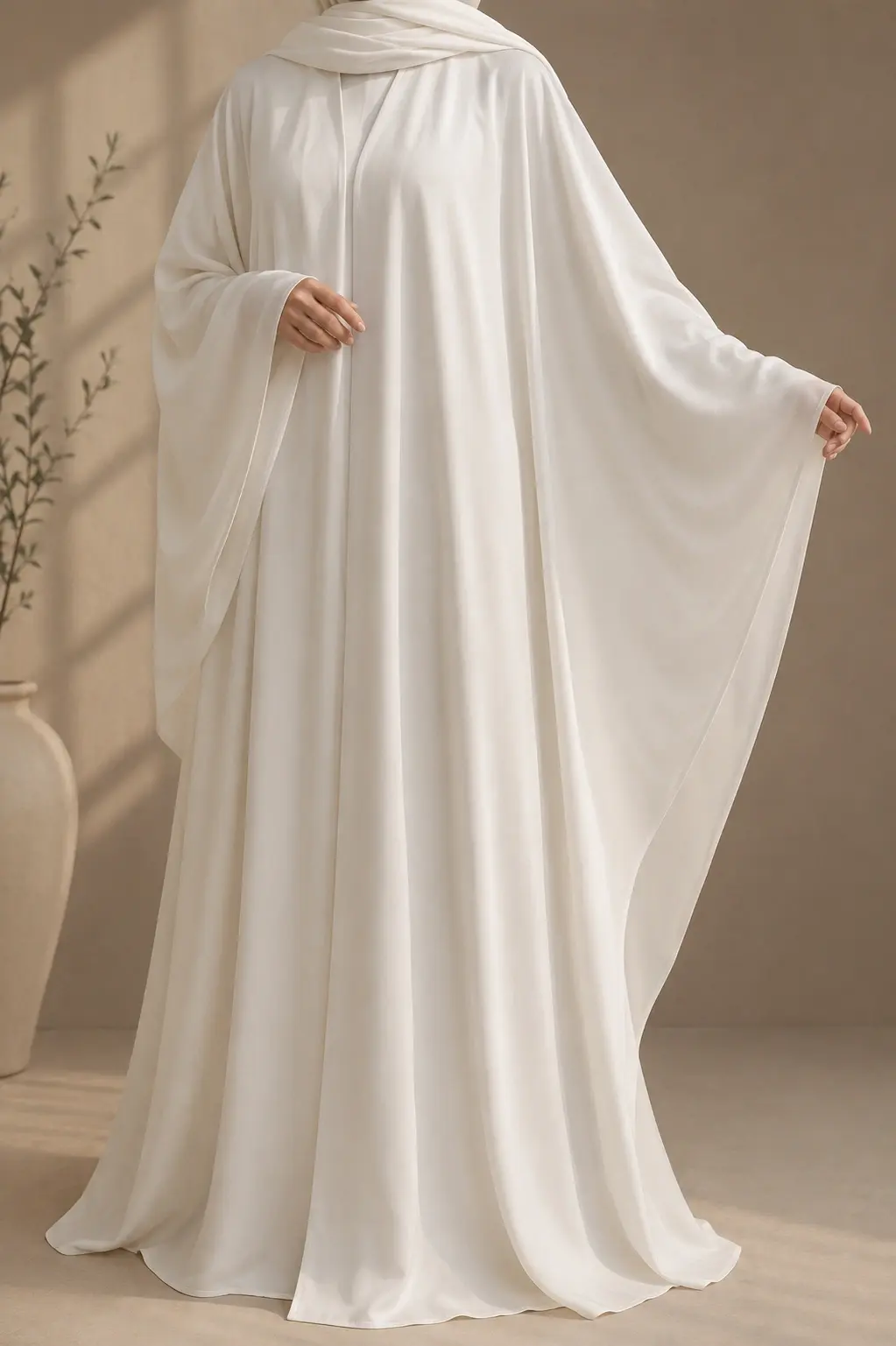
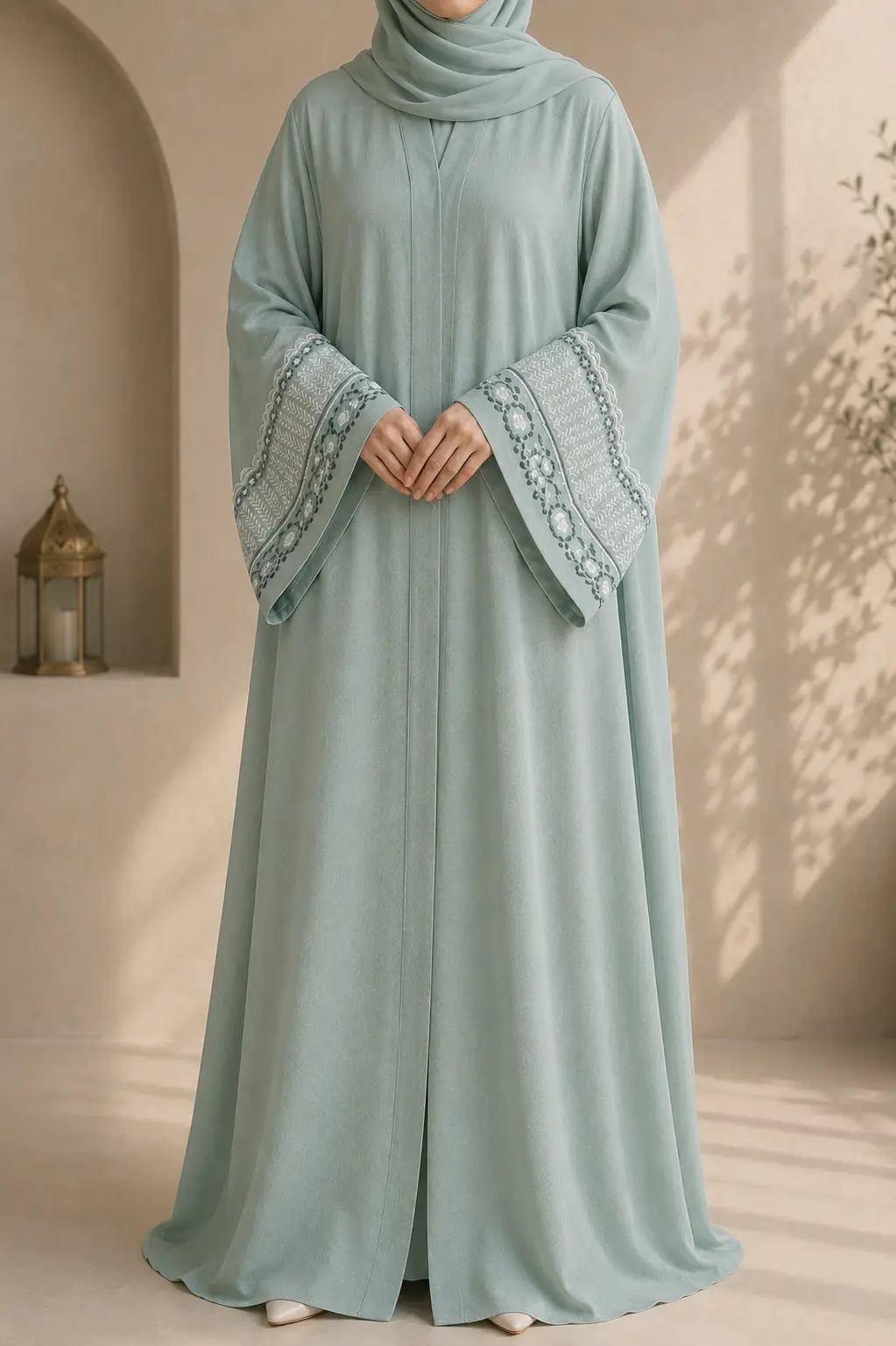
Built for weddings, Eid, and formal events rather than daily wear. Expect heavier fabric, beading or embroidery detail, and a higher price point. Not something you reach for on a Tuesday, but worth having one good version in your wardrobe.
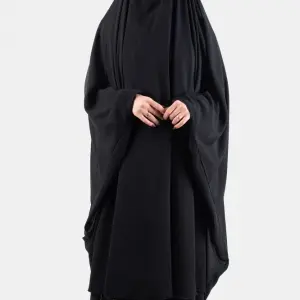
Fabric is where most first-time buyers go wrong, mostly because listing photos rarely tell you how something actually drapes or breathes. Here is an honest abaya fabrics guide covering what you will realistically encounter.
Nida: The most common abaya fabric and for good reason. It has a soft matte finish, holds its shape well, resists wrinkling, and works reasonably well across seasons. If you are unsure what to pick for your first abaya, Nida is the safest starting point.
Crepe: Lightweight with a slight texture and a beautiful drape. Popular for daily wear because it moves well and does not cling. Slightly less structured than Nida, which some people prefer.
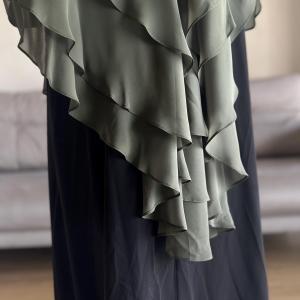
Chiffon: Very lightweight and semi-sheer, so it is almost always lined or layered rather than worn alone. Common in warm-weather and summer abayas, and often used for outer wrap layers over a base abaya.
Linen: Genuinely breathable and ideal for hot, humid climates, though it wrinkles more easily than synthetic blends. Worth it if you live somewhere genuinely hot and prioritize comfort over a crisp finish.
Satin and Silk-Blend: Reserved mostly for occasion wear. These fabrics have a visible sheen and drape beautifully, but they show every crease and are not practical for daily errands.
Polyester-Viscose Blends: Budget-friendly and low-maintenance, though quality varies enormously between sellers. A cheap blend can feel stiff or plasticky, while a well-made one can be almost indistinguishable from pricier fabric.
This is really the heart of how to choose the right abaya, and it has less to do with trends than most guides suggest. It comes down to three honest questions.
For everyday things like school runs or errands, you want something easy to move in and easy to wash. For a wedding or a special occasion, comfort matters less for a few hours, so you can go for something with more detail and drama. One abaya rarely does both jobs well, so it helps to think of these as separate.
This gets overlooked constantly. A heavy embroidered abaya bought because it looked stunning online can become something that sits unworn if you live somewhere hot and humid. Match the fabric weight to where you actually live, not the climate in the product photos.
A few honest, practical notes on fit:
Shoulder width matters more than length. An abaya with shoulder seams that sit too wide or too narrow will never look right no matter how good the fabric is. If you can only get one measurement right, get this one.
If you are petite, a floor-length abaya may need shortening. Many international buyers underestimate how much extra length standard sizing includes.
A defined waist tie or belt can add shape to a boxier cut without sacrificing modesty, which is a useful trick if you find straight-cut abayas unflattering.
Sleeve length should be checked separately from body length. Wide or bell sleeves in particular vary enormously between sellers, and this is the most common return reason for online abaya orders.
Hand wash or use a gentle machine cycle for delicate fabrics like chiffon and silk-blends. Nida and crepe generally tolerate machine washing well on a cool, gentle setting.
Hang dry rather than tumble dry wherever possible, especially for embroidered or beaded pieces, since heat can warp detailing and cause shrinkage.
Iron on a low setting or steam instead, particularly for linen and crepe, both of which can shine or scorch under a hot iron.
Store on a hanger rather than folded for structured or embroidered abayas, to avoid permanent crease lines forming across embellished sections.
Focus on shoulder width and actual body measurements rather than a generic size label, since sizing varies significantly between sellers and regions. Always check the specific measurements in centimetres or inches provided in the listing, and compare them against your own measurements rather than assuming your usual size will match.
Linen, crepe, and lightweight Nida are the best choices for hot and humid climates. They are breathable and comfortable for daily wear. Heavier fabrics like satin or silk-blends should be reserved for occasions rather than everyday use in warm weather.
A kimono abaya has a looser, wrap-style silhouette typically without a fitted waist, often tied with a sash. An open (front-open) abaya has a more structured cut that opens down the front, usually secured with buttons or ties, and can be worn open or closed depending on how it is styled.
Nida is a matte, medium-weight synthetic fabric widely used in abaya manufacturing. It holds its shape well, resists wrinkling, and works reasonably well across different seasons, making it one of the most practical and popular abaya fabrics for daily wear.
Yes, many retailers ship abayas internationally, though it is worth checking shipping times, customs handling, and the return policy for international orders before purchasing, since return options are sometimes limited to domestic customers only.
Most people are well served by two or three versatile daily abayas in breathable fabric, plus one occasion abaya for weddings, Eid, or formal events. Building a small wardrobe of genuinely well-fitting pieces tends to get more actual wear than a large collection of impulse purchases.
Share:
A complete guide to Saudi spices, from Kabsa spice mix ingredients to everyday seasonings, discover the essential Saudi...
Some of Saudi Arabia's most beloved baked goods are still unknown to much of the world. Explore traditional favorites li...
The Saudi thobe is more than traditional clothing. This guide covers what it is, how it differs from other styles, how t...
Ten Saudi-origin superfoods nutritionists and health buyers seek worldwide. From Ajwa dates to black seed and Talbina, d...